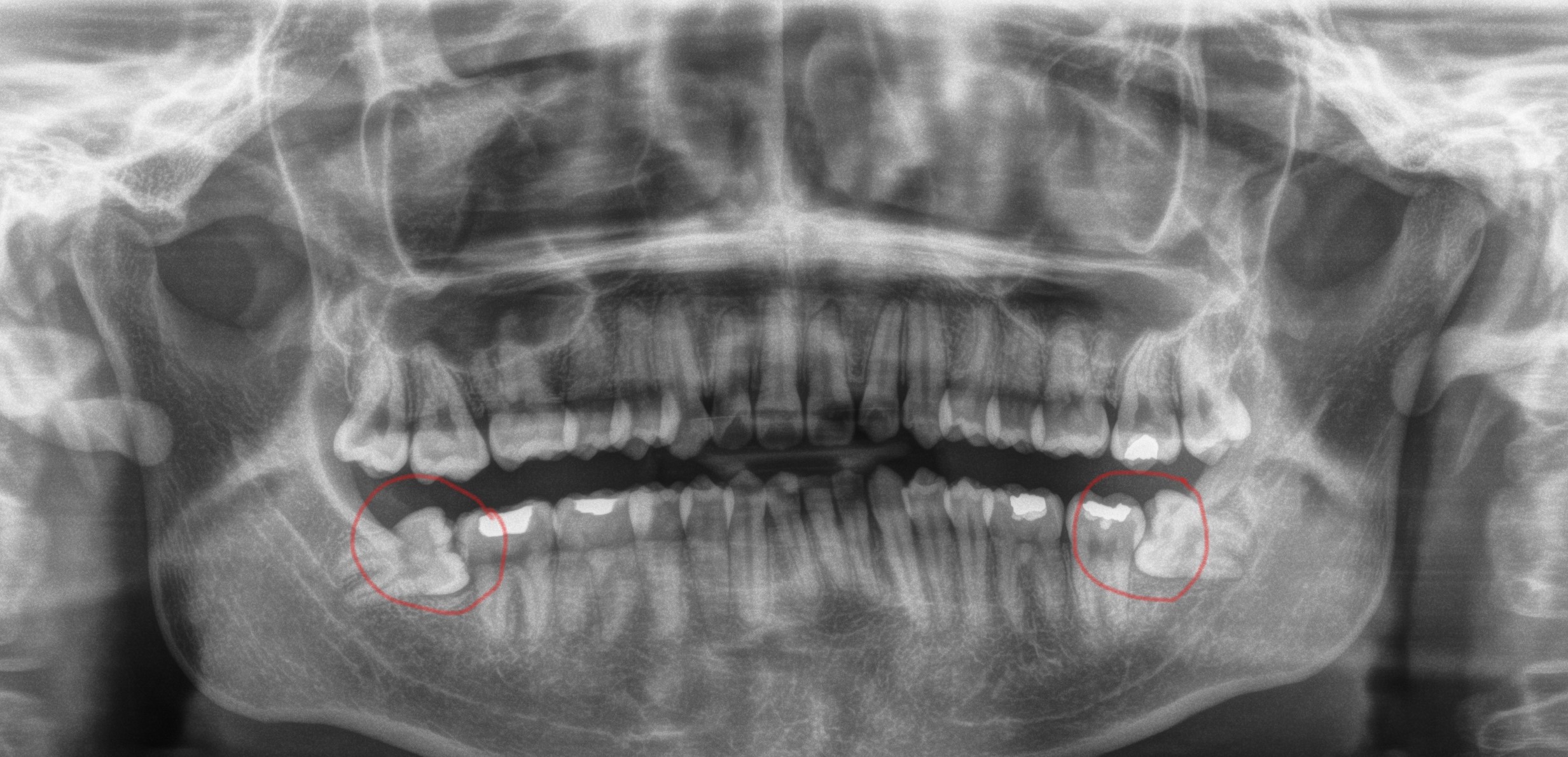
Wisdom tooth removal is very common, where the teeth are often impacted. Wisdom teeth are the third molars in the upper and lower jaws and the last teeth to appear, usually in early adulthood. All 4 may be present or some may be naturally missing. They may or may not be impacted in the jaws.
When is wisdom tooth removal indicated
A partially erupted wisdom tooth that traps food and causes decay of the second molar in front of it
Inflammation of the gum covering part of the wisdom tooth
Ulceration of the soft tissue trapped between upper and lower wisdom teeth
A decayed wisdom tooth that cannot be reached for cleaning
A wisdom tooth pushing on other teeth and causing poor alignment (this is debatable)
Related pathology such as a cyst, which can destroy bone and damage other teeth and gums (refer to Oral Surgeon)
Assessment before surgery
Medical and dental history
Access to the tooth on jaw opening
Any pain and swelling related to the wisdom teeth
A course of antibiotics, painkillers and antibacterial rinse where needed, to control infection and allow better healing after surgery
X-ray to show the anatomy of the tooth, its angle and depth of impaction, and its proximity to vital structures such as the sinus or major nerve
Challenging cases will be referred to our Oral Surgeon colleagues.
After surgery
Bite firmly on the gauze and be gentle when rinsing
Rest and avoid vigorous activity
No alcohol and no smoking
Complete the antibiotic course
Soft diet for the first two days, chewing on the non-operated side
Drink plenty of fluids
Use an ice pack to reduce swelling
Possible problems
Dry socket–poor healing may occur and easily managed by the dentist
Numbness, especially if the wisdom tooth is close to the nerve. It may take weeks or months to resolve.
Pain, swelling and difficulty opening the mouth (trismus) may occur. Take medication as directed.
Excessive bleeding, often from repeated or vigorous rinsing. Biting on gauze helps; contact the clinic if it persists.
Lip sores from stretching of the lip during removal
Most wisdom tooth removals heal uneventfully.
What makes an extraction difficult
A grossly carious tooth that fractures easily
Dense bone
An extra root not visible on the X-ray, which adds resistance
Minor surgery with sectioning of the roots and bone guttering usually resolves the problem.